Can you change the website yourself, today?
If nobody in the business can change a phone number, a price or a photograph on the site without paying somebody, that is the first mark against improving it. A site that is locked, whether by an old platform or by a company holding the logins, costs money every time it is touched, and it quietly stops being touched. Look at the news page. If the last post is three years old, that is usually why.
Where you can edit it, the sums change. Brodstock’s site is changed every year, with line-ups, maps and updates going on as the festival happens, and that is what a site worth improving looks like: it moves with the thing it is for.
Does the site work on a phone, properly?
Open it on your own phone, on mobile data, standing outside. If the text needs pinching, the menu hides the number, or the page takes more than a few seconds to show anything, that is a build problem and no amount of new wording fixes it. Most of the people who will ever look at a Halifax trade or service business are on a phone at the time, often in a van or on a site.
Slow is the one owners miss, because on the office wifi the site feels fine. A page that is heavy with full-size photographs can be trimmed on the site you have. A platform that is slow by design cannot, and that is a rebuild.
Is anyone finding it?
Search Console answers this in ten minutes, free, and we look at it before recommending anything. It lists the searches your site appeared for, where it ranked and how many people clicked. A site that appears for the services you want, even on page two, has something worth protecting. A site that appears only for your own company name has no search value to lose, so a redesign costs nothing there and the case for improving it gets much weaker.
The reverse matters too. If the site ranks well for the jobs that pay, be careful with a redesign, because the page addresses and the content that earned those positions have to be carried over on purpose. There is a separate guide on this site about what a new website does to Google rankings.
What does improving a website look like in practice?
New words, new photographs, a page for each service, a shorter form and a phone number that shows on every screen, in roughly that order. None of it needs a new site. It is also what keeps a site working after launch: RB Electrical’s has been fed with content and search work for five years, each service with a page of its own, and the enquiries have averaged around two a week over that time.
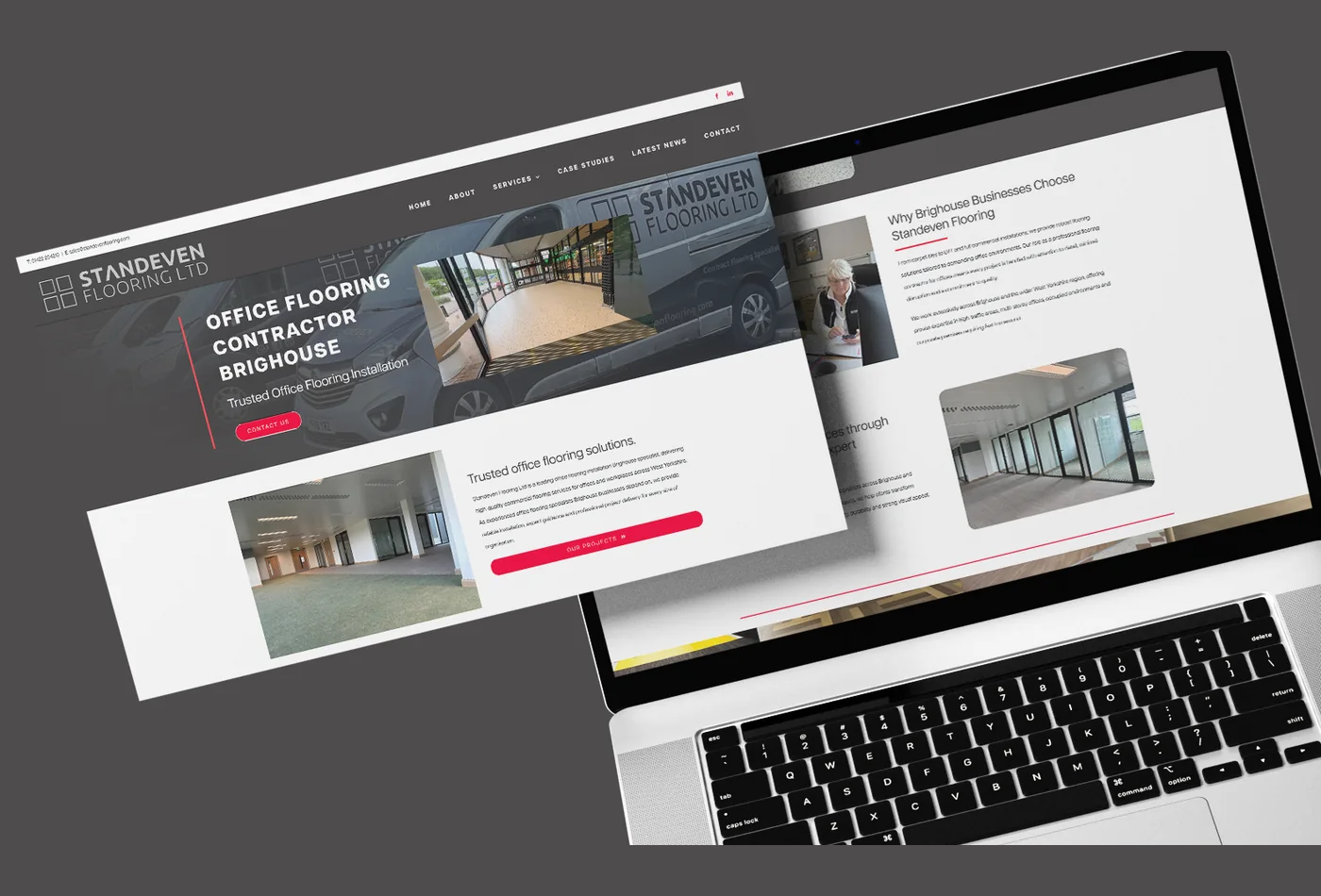
Standeven is the other pattern. Their website was redeveloped, and the improvement has been continuous since: photography and video shot on site as jobs happen, then written up. Gareth’s review mentions the website update and the on-site footage in the same breath, which is the point.
When is a redesign the only sensible answer?
When two or more of the checks above fail, or when the business has outgrown the site entirely. A firm that started domestic and now does commercial contracts, or that added a service which now brings in a third of the turnover, is describing itself wrongly on every page, and rewriting the words on a structure built for the old business rarely works. The same goes for a site that cannot be edited and cannot be made fast.
A redesign done properly starts with the marketing questions, the ones a Halifax customer would ask, and carries over everything the old site earned. It is more money and more of your time. It is also the right call more often than owners expect, because most of the sites we are asked to look at were built for a business that has since moved on.
What will Halizona tell you if you ask?
Which of the two you need, and why, after looking at the site the way a customer and a search engine would. Sometimes the answer is a short list of changes to the site you have. Sometimes it is a rebuild with a fixed figure attached. Either way you get the reasoning in plain English, and you are free to take it elsewhere.